Traditions of Roman Catholic Homes (TORCH)
2005 Promoted Homeschooling Among Catholic Familie
Traditions of Roman Catholic Homes (TORCH) was an association of lay faithful established to promote homeschooling among Catholic families as well as to support those families who are engaged in providing their children's primary education at home.
Content is from the site's 2005 archived pages providing a small glimpse of what this site offered its readership.
If you are interested in TORCH and its mission to help the Catholic Homeschooling Community there are a number of chapters in the US. A web search "TORCH homeschooling" should help you find them.
Welcome To Our Web Site! Circa 2005


TORCH's Mission
Traditions of Roman Catholic Homes (TORCH) is an association of lay faithful established to promote homeschooling among Catholic families and to support those families who are engaged in providing their children's primary education at home.
"Since parents have conferred life on their children they have a most solemn obligation to educate their offspring. Hence, parents must be acknowledged as the first and foremost educators of their children. Their role as educators is so decisive that scarcely anything can compensate for their failure in it." (Gravissimum Educationis #3)
TORCH has its foundation and as the guiding principle of all its functions and activities, fidelity to the teachings of the Roman Catholic Church, particularly to the Pope, who, as successor to St. Peter, is the universal teacher in matters of faith and morals, and to the diocesan bishop teaching in communion with him.
...Religious submission of will and mind must be shown in a special way to the authentic teaching authority of the Roman Pontiff, even when he is not speaking ex cathedra. That is, it must be shown in such a way that his supreme magisterium is acknowledged with reverence, the judgment made by him are sincerely adhered to, according to his manifest mind and will. (Lumen Gentium #25)
1) Our single and most important purpose is that of aiding individuals and families into a closer and more intimate union with Jesus Christ, the Son of God, who is Lord and Savior to all and to thus spread the Kingdom of God on earth.
(2) The Blessed Virgin Mary, is for each Catholic, the most complete model of the new creature formed by the redemptive power of Christ. Therefore, let every Catholic cultivate a true devotion to the Blessed Virgin Mary, the most loving mother of the Church. This consists most especially in the imitation of her virtues: above all, her faith, hope and love, her humility, her obedience, her simplicity, and her collaboration in the redemptive plan of Jesus Christ.
(3) TORCH takes as its definite and authoritative teaching the Universal Catechism (published by the Magisterium, the supreme teaching authority of the Roman Catholic Church) which is specifically signed by Pope John Paul II himself.
(4) TORCH membership is open to all persons, single or married, regardless of religious affiliation.
(5) Non-homeschooling families are encouraged to join TORCH so that they can participate in any of our activities on non-school days, evenings, or weekends. Of course, they are most welcome to attend any functions during school hours should they decide to excuse their child from attending school.
(6) Homeschooling is a vibrant, positive and challenging educational option. Homeschooling is not to be only a negative reaction against the public or parochial schools even though homeschooling may be used as a transitional situation while some families are seeking another educational alternative. Parents must impart the truth to their children for THE TRUTH of our Catholic Faith is the foundation of knowledge from which all other learning flows. From parent to child, the love for human virtues and academic excellence is passed on through example and invitation.
(7) TORCH strongly endorses the Roman Catholic Church's teaching on sexuality and bioethics (e.g., fornication, adultery, in-vitro fertilization, artificial insemination, contraception, abortion, et. al.). These actions are in direct violation of the family as created by God. As TORCH and homeschooling deal specifically with families and home life, it is necessary to make this philosophical connection between human sexuality and TORCH.
(8) TORCH is always open to new ideas and activities on how to better promote and aid the building of authentic and strong Christian homes, thereby instilling a zealous and apostolic Christian lifestyle in our families, our neighborhood, our country, and our world.

TORCH's Goals
(1) To promote and encourage Catholic family life by providing a support group for families that opt to educate their children at home.
(2) To foster the 3 vocations of married, single, or religious life through our activities and experiences.
(3) TORCH supports & fosters the family as the primary place where vocations to the religious life are nurtured & formed. We encourage our members to be open to God in calling their children to the various forms of religious life, i.e. priests and religious or consecrated lay people.
(4) To teach the traditions and history of our Holy Mother Church, devotion to the Blessed Mother, the lives of the saints, and reverence for the Holy Father, our Pope, through in-home activities.
(5) To support families in their homeschooling efforts by conducting a monthly forum at which curriculum, books, ideas, and questions can be discussed.
(6) To sponsor trips to religious shrines, churches, and places of interest of the Catholic Faith.
(7) To furnish opportunities for field trips relating to Art, Music, History, and Science.
(8) To provide Catholic playmates for our children.
(9) To provide a relaxed monthly get-together for parents to meet socially through lectures and audio and/or video presentations, so as to aid adult formation in the Faith.
(10) To provide communication through newsletters, meetings, and phone chains.
Suggested Activities
TORCH suggests the following activities for its chapters and members:
(1) Monthly confession and spiritual direction by a priest centered around a scheduled Eucharistic celebration.
(2) Home Activity: The home activity is designed to celebrate a certain saint's feast day, Marian holy day, liturgical feast or season, usually on a monthly basis. (It can include lesson, craft and snack, or a guest speaker, depending on the hostess. Snacks, babysitting, craft and lesson are usually handled by a different mom so as to share the responsibility.)
(3) Homeschooling Forum: A monthly meeting to discuss questions, curriculum, books, and ideas. Topics can vary each month. Non-homeschoolers are welcome.
(4) Book clubs, writing clubs, boys club, girls club, scrapbook, men's basketball, pro-life activities, math club, science club, and St. Jerome's book club.
(5) Family Activities: Suggested times all families could gather and celebrate church feasts: Blessed Mother's Birthday, Epiphany, St. Joseph's Feast Day, Palm Sunday, May Procession, etc.
(6) Field Trips: Examples are: pilgrimages, museums, nature centers, zoos, farms, symphony concerts, places of employment, neighborhood businesses.
(7) Weekday gatherings: Meet for Mass, devotions, games, and picnics.
(8) Rosary Making: (This can be done by individual families or as a group on a calendar basis. Our Lady's Rosary Makers is one distributor where you can find the proper supplies: P.O. Box 37080, Louisville, KY 40233. Phone 502-968-1434.)
(9) Legion of Mary Junior Praesidium: This group, dedicated to the service of Our Lady, is geared for ages 8 and up. (Legion consists of an hour long meeting and an hour's work in spreading Christ through His Mother. This could mean visiting a nursing home or working in the State Fair handing out rosaries.)
(10) Parent's Night Out: A monthly night out to pray, share a tape, speaker or discussion on a homeschooling or family theme.

How One Family Learns
At our house, living and learning are not two separate activities. We just live our lives and learning is intertwined with the business of living. No two days are the same and most days are not predictable with the exception of outside-the-home activities such as gymnastics, play dates, appointments and Mass. We do not have a set school schedule, no grades, no tests, no lesson plans or curriculum. Our approach to learning is called unschooling, child-led learning, or interest-initiated learning.
The definition of unschooling is as diverse as the types of homeschoolers. Unschooling is more of an attitude than a technique. It is a belief system more than a method. It is the opposite of the cookie cutter attitude found in our society. It is a belief that all people, from the cradle to the grave, have a built in desire to learn. All two-year-olds have a natural, curious urge to explore everything they can reach. They want to learn. Why do so many ten-year-olds dread learning and school? They had that curious drive but somehow, somewhere along the way, that desire was squashed. Children will learn if given a chance. Just as all children learn to walk and talk on their own, they can learn to read and write and any other skills they may need. Learning does not take place beginning at age 5, for 5 days a week, for 6 to 8 hours a day. If children are around people who love them and who love life and learning, they will learn. If you allow a person to pursue their own interests they will end up gaining the knowledge they will need in order to pursue the life they want. Unschooling has nothing to do with the tools one may use to learn something. It allows for computers or no computers, workbooks or no workbooks, textbooks or no textbooks. It is learning what one wants, when one wants and in the way one wants. An example is when my eight-year-old decided she wanted to learn cursive handwriting. I had the books available, and I helped her when she asked, but she decided when and why.
We have chosen to homeschool in this way because it seems the most natural and best way for our family. We want to keep alive the spark of curiosity and natural love of learning with which all children are born. We want them to see learning as an on-going process that continues throughout life. We also like the flexibility to stay on one topic instead of having to move onto something else in a pre-set curriculum. Most children, if allowed, will 'śbinge'ť on one topic for a long period of time. My daughter did this with story writing. She spent about a month mostly writing stories. Her spelling, grammar and handwriting greatly improved.
Unschooling is not ignoring your kids. It is an interactive type of parenting. It means really listening to them and being a facilitator for them. I answer questions and gather materials on information they are interested in. For example, my daughter wanted to learn about spies and detectives. I checked out books on this for her and helped her think up and write her own mystery for others to solve. Real life situations provide so much learning. When we cook or bake (which is often), they are using reading and math skills. When we went on vacation, they were interested in our maps and how to use them. They use math skills to figure out how much money they have in their spend account.
Because we are unschooling, I sometimes am asked several questions or face objections. Some typical questions from some of my Catholic friends are "What about religion '” how will they learn that?"
Religion is a part of our lives. We read our Catechism and go to Mass together. We celebrate feast days and holidays. My children like to do this because they see their parents and others receiving Sacraments, and they want to be included.
Another common objection is that the children will not learn everything they need. When they are so young, it is hard to say what they will need in 8 to 10 years. Interest-initiated learning allows them to see what they like and get the basics in the process. They can pursue higher level subjects if need be. Not everyone needs to learn calculus or organic chemistry.
The last question I sometimes come across is 'śHow will they learn to stick with a task and do things that are hard or that they dislike?'ť One very good way to learn how to stick with even unpleasant tasks is to give children chores from a young age. I do not like laundry, but it must be done. Also, if kids are motivated to do something, they will stick with it even if it is hard work.
Unschooling is a way of life for our family. It is a lifestyle rather than just an educational choice. It takes faith on our part because of the way we were schooled. It is a process of relearning or learning how to learn. But the journey is most exciting. We unschool because it is the most natural and rewarding way for our family to live.
A Lesson in Unschooling
By Marsha Brady
When I first began investigating the idea of homeschooling, I found the idea of unschooling or interest-based learning appealing. My children were very young at the time and I had seen for myself how they naturally learned how to write and how much they loved learning about new things. They loved books and I wished to keep this love of learning alive.
Then, as I began to learn about the Holy Catholic faith, I was introduced to a whole different aspect of homeschooling. I had had the impression that Catholic homeschooling meant structured curricula, which meant well-disciplined and well-educated children. On the other hand, I had found that idea of unschooling was often equated with liberalism with everything from child discipline to religion. Yet I knew that unschooling had its merits and could be successful. What has resulted for me is a combination of both; but it took a valuable lesson to arrive at this approach.
As my children reached school age, I began to feel a need for more structure in our day, particularly with my boys. I thought it would be beneficial to direct some of their energy to academics in a more consistent way. I wanted to make sure that my children learned all the essential skills, particularly Writing and Math, and I did not have the same security that if we 'unschooled' we would cover all the basics. We were doing well with a systematic, yet fun, Bible history study and I wanted to start reading good literature to them. With a new baby arriving every couple of years, we had to make it a point to read to the kids, whereas when we had fewer children, my husband and I easily had time each day to do this. This approach worked out well and still left the kids plenty of time to pursue their interests.
I'm not sure how I started to get off balance. We had a new baby and he was having breathing problems which caused a lot of worry. I began to feel overwhelmed with housework, the baby, and the schoolwork. The older kids must have sensed this, for in my mind they were becoming less cooperative about schoolwork. Then something I happened that I never expected to occur. My joy of homeschooling left me. It just became another responsibility. Looking back, I realized that this was a trial sent by our merciful God. I was tempted to put the kids in school. God, in His mercy, was leading me and getting my attention through this trial.
At the time, I began a novena to the Sacred Heart of Jesus. One of my intentions was to obtain the grace to be a good mother. For some reason I decided to drop our schedule for the time being and do unschooling. Some interesting things happened. My two older boys became very interested in Geology and spent much time looking for and examining rocks. They started checking out stacks of books from the library like we used to do before school work. I would see my oldest son reading to his younger siblings all on his own and I believe I became more attentive to my younger children. Most importantly, my joy and desire to homeschool returned. Perhaps it was just that I stopped pressuring myself (even though I didn't realize it at the time). I felt free to enjoy my children again and freedom from certain schedules and
expectations I had derived.
The lesson for me was that we have different needs at different times in this homeschooling adventure. I'm sure that when our next baby arrives, we'll be 'unschooling' again. Or we can allow ourselves to have certain days as unschooling days. The key for me is to be willing to be flexible and have a happy, peaceful home. Sometimes this means that unschooling days are those when the children simply keep occupied in a positive way and not letting myself feel overwhelmed. Other times, unschooling means a creative project, having friends over, or taking a trip. Whatever the case may be, the alternative of unschooling has been a blessing for our family.
Greetings By Inchi Sugarman
for the August 2005 TORCH Newsletter
In his writings, the late, great Pope John Paul II, often referred to the school of Mary, or the school of the saints, or the school of the family from whom or where we could learn to become closer to Christ. If there is one school where I have learned and where we can learn more even now, it is the school of Pope John Paul II.
It is no coincidence that God called Pope John Paul II home only after he had concluded writing about the source and summit of the Christian life — the Eucharist — in Ecclesia de Eucharistia and proclaimed October 2004 – October 2005 the Year of the Eucharist. Nothing more could have surpassed this theme.
The months of March and April were the most emotional times I can remember and I am sure many of you can relate to this feeling. What Catholic could not have felt intense emotion — and during Lent and Holy week at that — at the fierce battle to keep Terri Schiavo alive? This was followed by the Pope's heart wrenching illness and death. At the same time, we felt united with the saints and angels in the joy of his reaching the beatific vision and the hope of his sainthood and his intercession for us suffering souls. How could we not have felt triumphant that the world's attention was on the Church and our beloved shepherd? We witnessed in the most fantastic way that he did not belong to us Catholics alone.
Shortly thereafter, we experienced a momentous unity in spirit and prayer in the Church during the Conclave. The conclusion was another explosion of delirium at the election of Cardinal Josef Ratzinger as Pope Benedict XVI.
It was a grace-filled time and I felt particularly privileged to have been reading Pope John Paul II's last encyclical, Ecclesia de Eucharistia at the time that these events were taking place. I was humbled and sometimes overcome with emotion. The primary purpose of my reading was to study. But so often, I had to retreat to the cloister of my closet so that I could shut out the world and just reflect on the powerful points I had just read. Even though I already believe in the Real Presence, I realized afterwards how much more enriched I had become and how much I had taken for granted in the past.
At the same time, I cannot help feeling frustrated in the inadequate amount of attention to this crowning piece of John Paul II's legacy that so many Catholics don't even realize that this is the Year of the Eucharist. The year is quickly passing by and there is so little time left to live it to the fullest.
Pope John Paul II wrote Ecclesia de Eucharistia in order to rekindle in us an amazement and gratitude for the Eucharist. If you have not yet read it, here is why you should. Did you know that reflecting on this encyclical will bring you deeper into the mystery of Christ's redemptive sacrifice in the Liturgy? Did you ever consider that it will help you elevate your heart and mind with all the faithful, the angels and the saints in worship during the Mass? What measures are you willing to take to have a foretaste of Heaven and have whispered into your conscience the secret of eternal life?
The Pope was one of the most well traveled men in history. Thus he was able to celebrate Mass in varied and unconventional places. Wherever he was, whether in a cathedral or a humble country church, a stadium or a city square, he always had the experience of the universality of the Mass and he describes it as "cosmic." When we are at Mass we must realize that we are united with heaven and earth in a heavenly Liturgy. Just recall the parts of the Mass when we honor Mary and all the saints and when we blend our voices with the choirs of angels in hymns of praise. This is the one time when having our head in the cosmos is a very good thing.
Unfortunately, our minds often wander during the priest's recitation of prayers and we can miss the beautiful words of praise and worship because we are in a routine of waiting for our turn to respond. As an aid to re-directing your mind, you may want your family to restore the practice of praying with the missal, which so few people do anymore.
In the encyclical, the Pope refers to shadows that lead to confusion about the Eucharistic mystery. Liturgical abuses seem to be a pet peeve even of Pope Benedict XVI. In many of his writings prior to his papal election, he loathes the misplaced creativity of the people who, misinterpreting the meaning of active participation in the Mass, have introduced inappropriate innovations of entertainment value during the Liturgy and placed an emphasis on communion as sharing with each other. This makes the faithful forget that this banquet is our communion with God. We cannot reduce it to merely a fraternal banquet. The early Christians fell into this profane error and St. Paul rebuked the Corinthians severely for it (cf. 1 Corinthians 11).
For whatever reason, there will be distractions beyond our control, boredom, tiredness, and emptiness that we will sometimes feel. Yet we can learn to orient our minds and wills towards God and our communion with Him. This requires careful interior preparation plus an attitude adjustment on our part. One of the few things I know I have control over is my eyeball rolling.
A good reminder is that there is always a miracle present before us at every Mass. I have learned that it is not enough to let my family arrive at church and let Mass "happen." To be in the shoes of the disciples on the road to Emmaus, we must first be instructed in the Scriptures by Christ. If need be, our preparation must begin at home in reflection on the Word of God. Then we will be able to gaze on the Sacred Host, our eyes recognizing Our Lord in amazement.
If your loved one, say a father, husband, or son, told you before his death that you would be able to look at the stars at night and one particular star would be him watching over you, you would be outside every night in search of that star. Gazing at it, you would speak to it and be consoled that the star — your beloved — was communicating with you. Jesus did exactly that for us. Since He told His beloved disciples and His mother that He was present in the bread and wine, this must have given them real strength and consolation. They protected this legacy and so we are able to experience the same closeness to Christ as did His earliest followers.
Jesus created a way to be truly present with us for all time. He instituted the Eucharist to be perpetuated forever through the Sacrament of Holy Orders and apostolic succession. He chose 12 men and those who succeeded them, the divine authority to say, "This is my body," and "This is my blood." In Chapter 6 of John's Gospel, He promises us that we will live forever if we eat His body and drink His blood. St. Ignatius of Antioch refers to the Eucharist as the medicine of immortality and the antidote to death.
Outside of the Mass, we continue to adore Christ under the veil of bread. Thomas Aquinas' hymn, Adoro Te Devote, expressed the essence of faith in the Real Presence. St. Alphonsus Liguori says, "Of all devotions, that of adoring Jesus in the Blessed Sacrament is the greatest after the sacraments, the one dearest to God and the one most helpful to us." Pope John Paul II, a man who was, in our time, the very portrait of a man of prayer and action drew all his consolation, support, and strength to the very last drop from the Eucharist. He said, "It is pleasant to spend time with Him, to lie close to His breast like the beloved disciple."
But beyond stating unequivocally that the bread and wine were His body and blood, Our Lord, went on to say, "… which is given for you," and "… which is poured out for you." Thus, the Mass is both a sacred banquet and a sacrificial memorial. Together, the sacrificial memorial and the means He instituted for us are so decisive for the salvation of the human race. Therefore, all generations will be able to partake in this gift of redemption, which is perpetuated until Christ returns in glory (cf. "When we eat this bread and drink this cup, we proclaim your death Lord Jesus until you come in glory).
Every single Mass brings us to the very hour of our redemption. In a sense, we can say that time and place don't exist. Despite the passage of 2000 years, we return to that same hour when Christ won for us our redemption. We are present at the very moment of Jesus' Paschal sacrifice. Here again is another cause for amazement: while we are assisting at Mass we can realize, "This is the moment of my redemption."
In the Eucharist, the mysterium fidei is accomplished. In this one sacrificial act that is re-presented yet not multiplied, Christ gives back to the Father, the world that God created but in a restored form. This is why we should be filled with profound gratitude for this gift par excellence. Christ gives us the gift of Himself and, at the same time, He gives us back to the Father as a gift.
What words can we use to describe the manner in which the Eucharistic Banquet ought to be celebrated in a manner that lends it all the dignity and magnificence it deserves? Solemnly, simply, and extravagantly. We can turn to the Gospels and discover the scriptural justification for these.
The prelude to the Last Supper was an event where Mary, the sister of Lazarus pours a flask of costly ointment over Jesus' head. This is was an anointing in an anticipation of the honor that Christ's body will continue to merit even after his death. Mary devoted the best of her resources even though it appeared extravagant to the disciples and Judas in particular. Thus this is the way we can express our adoration of the unsurpassable gift of the Eucharist.
Then Jesus commanded his disciples to prepare carefully the large upper room for the Passover mean. Preparation for the Passover is done meticulously. Then as Christ speaks the words over the bread and wine, there is an atmosphere of solemnity and sobriety. Over the years, the celebration was shaped to a Christian form (e.g. it was connected with the Resurrection and thus Easter) and purified to its current form.
The Liturgy is a like a wedding where the Bridegroom continually makes Himself a gift to His Bride, the Church. What therefore should be the adequate expression this banquet? Pope John Paul II says that there is no danger of excess in our care for this mystery!
The traditions that grew out of this mystical celebration became a source of great artistic inspiration in architecture, sculpture, painting, and music. At the same time, the motivation for the designs that sprang up around the world showed a clear appreciation of the mystery of the Faith. Sacred art must express in an outstanding way the mystery and the fullness of the Catholic Faith.
Pope John Paul II never fails to end his writings with an invocation of Mary. He praises Mary whom we can get to know in the Gospels. In the school of Mary, our Lord's is our teacher in guiding us towards a relationship with the Eucharist because she had this profound relationship with it herself. Mary encourages us to obey Christ who commands us to abandon ourselves to Christ, "Do whatever He tells you (John 2:5)." And as such we repeat what Christ commanded to "Do this in memory of Me."
Mary offered herself to be the first tabernacle in history. If we were to imagine her face in an enraptured gaze at the newborn Christ in her arms, this can inspire our own gaze as we receive Eucharistic communion.
Knowing that, as foreshadowed by Simeon, her Son would be a sign of contradiction and a sword would pierce her heart (cf. Luke 2: 34-35), we can understand how Mary's life was a daily preparation for Calvary — an anticipation of the Eucharist. A "spiritual communion."
Pope John Paul II also wants us to learn from the school of the saints. They were masters of the spiritual life so they can teach us what authentic Eucharistic piety is. Their daily lives were a witness to what it means when we say that the Eucharist is the source and summit of the Christian life.
Love of the Eucharist must impel us towards evangelization and ecumenism. Without diminishing its meaning, we should be anxious to hand on to future generations of Christians this treasure and mystery.
The Holy Father ends Ecclesia de Eucharistia with an emotional testimony of his own faith in the Most Holy Eucharist. He wishes to accompany us and strengthen our faith:
Ave verum corpus natum de Maria Virgine, vere passum, immolatum, in cruce pro homine! (Hail the true body born of the Virgin Mary, truly suffered and sacrificed on the cross for mankind.) Here is the Church's treasure, the heart of the world, the pledge of the fulfillment for which each man and woman, even unconsciously, yearns. A great and transcendent mystery, indeed, and one that taxes our mind's ability to pass beyond appearances. Here our senses fail us: visus, tactus, gustus in te fallitur (Sight, touch, and taste in You are each deceived), in the words of the hymn Adoro Te Devote; yet faith alone, rooted in the word of Christ handed down to us by the Apostles, is sufficient for us. Allow me, like Peter at the end of the Eucharistic discourse in John's Gospel, to say once more to Christ, in the name of the whole Church and in the name of each of you: "Lord to whom shall we go? You have the words of eternal life."
We have seen John Paul II canonize many saints who are examples of holiness for our day. Now that the process has begun for the cause for sainthood of Pope John Paul II, we can join the Church in this prayer. Santo Subito! … Sainthood Now! We can teach our children many facts about Pope John Paul II's life and the resources are limitless. But most important of all, we can teach them the thought of Pope John Paul II if we ourselves learn to think like Pope John Paul II, who loved Christ, served humanity, and built up the Church.

Join us for the 2005 National TORCH Leadership Conference
Friday, October 7 to Sunday, October 9
Dayton, Ohio
We are busily preparing for the 4th National TORCH Leadership Conference from Friday, October 7 to Sunday, October 9 in Dayton, Ohio. We have picked a very special weekend because it is dedicated to Our Lady of the Rosary and is the final month of the Year of the Eucharist. October 7, 2005 is the first anniversary of the release of Mane Nobiscum Domine, the apostolic letter that outlines Pope John Paul II's goals for the universal Church in celebrating the Year of the Eucharist.
The Year of the Eucharist cannot simply end without our making resolutions as a homeschool organization about how we are going to guard and live out the legacy of Pope John Paul II … how we are going to become truly Eucharistic followers of Christ and how we are going to bring Christ to the world through Catholic homeschooling.
This year's conference theme is "Engaging the Culture." We are extremely delighted to have EWTN's newscaster, Raymond Arroyo, as our keynote speaker. Our chaplain is Fr. Jeffery Jambon who is a bravissimo retreat master.
As we all aware, the culture is in urgent need to hear the message of the Gospel. We will discuss how best to reach the souls in this world who are at risk, especially the youth, by meeting them where they are … by engaging the culture that engulfs them.
The Dayton, Ohio chapter of TORCH (TORCH Holy Family Chapter of Greater Dayton) is graciously hosting us and has arranged a beautiful location for the conference. This is not just the conference site but where we will rest serenely for two nights. Please visit the website of the Bergamo Retreat Center to find out more about the facilities at www.bergamocenter.org.
As always, the conference schedule will offer you ample opportunities for networking, prayer, and discussion. Each of us will have the chance to share with other chapter leaders our successes and lessons we learned as leaders, facilitators, teachers, and volunteers in our homeschool groups.
With barely two months to plan your trip, now is the time to start making arrangements to come. If you are a chapter member, please offer to help make this trip possible for your chapter leader with anything from babysitting to driving together to offering financial assistance. Encourage your spouse and budding chapter leaders to join us. This is the same weekend as the Columbus Day holiday. It is an opportune time to take a few days off and become energized with others who, like you, have generously given their time to other families in servant leadership.
If there is anything we can do to help you with your trip, please call our Conference Liaisons, Thomas and Virginia Kuepper at (937) 845-3020 or e-mailkueppers@earthlink.net. More details will follow soon.
We joyously look forward to meeting you in person on October 7th!
Monthly Saint Activities 2005 - 2006
To honor the legacy of Pope John Paul II, we can learn about the holy men and women who were elevated to sainthood during the pontificate of this Holy Father.
|

 |
 |
|
Suggested In-Home/Saint Activity Procedures: I. Begin with a prayer invoking the wisdom and understanding of the Holy Spirit, the mercy of the Sacred Heart of Jesus, and asking for the intercession of The Immaculate Heart of Mary, TORCH patron saints Elizabeth Ann Seton and John Bosco, as well as the saint of the day. For example: |
A forum for homeschoolers to share their ideas. (From past issues of the TORCH NEWSLETTER.)

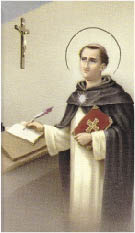
St. Thomas Aquinas is regarded by many historians as the most outstanding thinker and theologian of the Middle Ages.
Because he was slow and heavily-built, his fellow students called him “the dumb ox.” However, when he spoke, he was so brilliant that Albert the Great prophesied, “This dumb ox will fill the world with his bellowing.”
Thomas was canonized by Pope John XXII in 1323 and was declared a Doctor of the Church in 1567 by Pope St. Pius V. He was named patron of all universities, colleges, and schools in 1880 by Pope Leo XIII.
Aquinas was not only a man of great intellect but of great humility and holiness. His intercession is also invoked for chastity and learning.
TOPICS:
- A Day in the Life of a Homeschooling Family
- Beginning the Homeschool Day with Prayer
- Changes in Teaching Style Over the Years
- Christmas & Advent Celebrations
- Dad’s Role in Your Homeschool
- Family Apostolates
- Favorite Prayer of Love
- Encouraging Generosity in our Children
- High School and Middle School Social Needs
Beginning the Homeschool Day with Prayer
Sonia from VA
Before we start school work, my son and I say a short prayer which we composed and whatever formal prayers we are moved to pray. This is our prayer: Dear Jesus, please be with us while we homeschool today. Help Jonathan to learn as you did when you were a boy and help Mom to teach as our Blessed Mother taught you. Dear Holy Spirit, please be with us: in our minds and in our words, and in our hearts and in our actions. Grant that all we do may be truly pleasing to God, Our Heavenly Father. We ask this through the intercession our heavenly Mother. Hail Mary...
Fran from Florida
We try daily to say the Morning Offering, first thing after breakfast. Each day of the week a different child leads the prayer. We follow with three Hail Marys — one for the Pope, one to know our vocation and one for the President. After that, we mention any intentions we have. Some days we let everyone say their intentions; on some days it’s only the person who leads the prayer. Then we follow with 3 Hail Marys for everyone’s intentions. A lot of times, intentions are the same among the children, so we try to make sure there are different types of intentions — thanksgiving, petition, etc. I am humbled when I hear their intentions. After prayer we try to read from the Bible. I would like for it to be everyday, but it isn’t. Last year, we did it three times a week or so, and we were amazed how far we got through the New Testament, on only a chapter a day. It’s good reading practice too. If we are in the car, or on the way to Church, we will say prayers there. I notice a big difference if we don’t follow this routine!
Andrea from NY
Last year we said morning prayers and the Rosary on the way to Mass (it takes about 15 min. to get to the Church) and school prayers after breakfast. For several years we said the Sacred Heart consecration, but the kids really didn’t understand it, so I shortened it and combined it with the DeMontfort Consecration and Miraculous medal prayer. All the important things rolled into 4 sentences which they understand. “Dear Jesus help me to love You. Mary pray for us. Sacred Heart of Jesus I am all Yours and all I possess is Yours through Mary. O Mary conceived without sin pray for us who have recourse to Thee.”
After breakfast on school days we venerate 2 relics (Elizabeth Seton and Edith Stein) asking St. Elizabeth to help us to enjoy learning about God’s world and St. Edith Stein to help us become prayerful in all we do. Next we sing! I edited a few tapes I have onto one tape. This year we have been singing the Apostles Creed followed by a Works of Mercy song. After this we sing 2 Bible songs (from “Hide ‘Em in Your Heart”.) I’m going to change the Bible songs when they’ve all memorized the verses. This takes less than 10 minutes.
Beginning the Homeschool Day with Prayer
Sonia from VA
Before we start school work, my son and I say a short prayer which we composed and whatever formal prayers we are moved to pray. This is our prayer: Dear Jesus, please be with us while we homeschool today. Help Jonathan to learn as you did when you were a boy and help Mom to teach as our Blessed Mother taught you. Dear Holy Spirit, please be with us: in our minds and in our words, and in our hearts and in our actions. Grant that all we do may be truly pleasing to God, Our Heavenly Father. We ask this through the intercession our heavenly Mother. Hail Mary...
Fran from Florida
We try daily to say the Morning Offering, first thing after breakfast. Each day of the week a different child leads the prayer. We follow with three Hail Marys — one for the Pope, one to know our vocation and one for the President. After that, we mention any intentions we have. Some days we let everyone say their intentions; on some days it’s only the person who leads the prayer. Then we follow with 3 Hail Marys for everyone’s intentions. A lot of times, intentions are the same among the children, so we try to make sure there are different types of intentions — thanksgiving, petition, etc. I am humbled when I hear their intentions. After prayer we try to read from the Bible. I would like for it to be everyday, but it isn’t. Last year, we did it three times a week or so, and we were amazed how far we got through the New Testament, on only a chapter a day. It’s good reading practice too. If we are in the car, or on the way to Church, we will say prayers there. I notice a big difference if we don’t follow this routine!
Andrea from NY
Last year we said morning prayers and the Rosary on the way to Mass (it takes about 15 min. to get to the Church) and school prayers after breakfast. For several years we said the Sacred Heart consecration, but the kids really didn’t understand it, so I shortened it and combined it with the DeMontfort Consecration and Miraculous medal prayer. All the important things rolled into 4 sentences which they understand. “Dear Jesus help me to love You. Mary pray for us. Sacred Heart of Jesus I am all Yours and all I possess is Yours through Mary. O Mary conceived without sin pray for us who have recourse to Thee.”
After breakfast on school days we venerate 2 relics (Elizabeth Seton and Edith Stein) asking St. Elizabeth to help us to enjoy learning about God’s world and St. Edith Stein to help us become prayerful in all we do. Next we sing! I edited a few tapes I have onto one tape. This year we have been singing the Apostles Creed followed by a Works of Mercy song. After this we sing 2 Bible songs (from “Hide ‘Em in Your Heart”.) I’m going to change the Bible songs when they’ve all memorized the verses. This takes less than 10 minutes.
REVIEW LIST
Review of Harry Potter
by Elizabeth and Michael Foss
In light of the recent Harry Potter craze, my 11-year-old and I decided to do a little critical reading together. We read the first book in the series and I asked Michael to write a review. Here, he shares his opinions and a suggestion, too:
My experience with Harry Potter was very decisive to say the least. It took me just one book to decide not to read the rest of the series. Eleven-year-old Harry Potter lives with the Dursleys, his aunt and uncle, and their spoiled son, Dudley. The Dursleys despise Harry for coming into their lives as an infant in a basket on their front porch. Mrs. Dursley's sister, Harry's mother, died alongside her husband. They were both wizards. The evil Lord Voldermort came to the Potter household when Harry was one to try to bring the Potters to the dark side. When the Potters refused, he killed the couple but Harry was too powerful for the lord and only was scarred.
The boy grows up thinking his parents died in a car accident. On Harry's birthday, a mysterious letter comes in the mail from a school that teaches boys and girls to become witches and wizards. On the day it's time to leave for the school, Hogwarts, the real adventure begins. Harry learns to make potions, how to transfigure rats into hairpins and other useful things.
The book consistently stumbles on the topic of right and wrong. For example: Harry and his classmates are learning how to fly on broomsticks when the teacher is called away for a while. She tells the students to stay put and not to fly! Well, the school bully, Draco Malfoy, decides to pick on one of the students by picking up the boy's broomstick and flying off. Harry Potter flies after Malfoy and just as Harry zooms up, the culprit goes down. The teacher catches Harry up in the air and she pretends to scold him in front of the class but then commends him for his flying ability behind closed doors. These kinds of mixed-message incidents happen throughout the book.
The book takes a very sinister, troublesome spin when Harry comes face to face with Voldermort. When the dark lord failed to kill Harry, he lost all his power. So he looks over the world trying to find someone to possess. With the body of a man in his control, Voldermort attacks Harry. The boy is so strong Voldermort's hands blister and burn when he touches Potter. The power is so great the body perishes but the dark lord filters into the air to find another victim.
The book's satanic references were very disturbing as can be imagined. I don't think it's appropriate for little kids. The author also portrays the muggles (non-magic folk) to be idiotic bumblers that have no clue about anything. The children in this book as well as the adults are very disrespectful. There is a lot of lying and cheating by both adults and children that goes unpunished. Many controversial things in the text were not needed, and they did not add any glory to this book. It was very disappointing.
A friend of my moms told me that in the second book, Harry and his friends bury a screaming mandrake root. The more the root screams, the more dirt they dump on it. A mandrake root looks like a baby. In case the reader didn't know that, there is a picture of it at the beginning of the chapter. I wonder why the author picked a root that looks like a baby to bury. [Mom's note: our dictionary says that the root of a mandrake has been traditionally used to promote conception. Why did she choose a mandrake?] The author says that in the fourth book Harry's hormones are supposed to kick in. I don't even want to know what that's supposed to mean.
Instead of Harry Potter, I recommend the Redwall series of books by English author, Brian Jacques. The books are about abbey mice who live around the medieval time. The mice live in a great sandstone abbey. The hero of the books is Martin the warrior (a mouse featured in all the books). Martin defends Redwall Abbey from villainous ferrets, weasels, stoats, foxes, and rats. The warrior mouse appears alive in four books, and comes to new champions of Redwall as a guide in dreams (much like Obi-Wan Kenobi in the Star Wars films).
The book has a very distinctive feeling of good and evil. The good abbey mice and their colleagues, portrayed by otters, moles, hares, hedgehogs, badgers, and squirrels, are exposed to many evils but always persevere through it all, never once dropping to evil's level. The books usually have very fierce battles that are described very graphically. The battles are very gory, and always the mice try to stop bloodshed from happening but once they are threatened to the point where combat is the only option, they fight. Always, mind you, the mice learn from the experience of war. The mice lose many friends and family during the wars but at the end of the book they always start to rebuild.
The books have very rich literary style and are very entertaining for kids and adults. The language really improves your grammar immensely.
Elizabeth and her son, Michael, homeschool from Virginia. This article first appeared in the Arlington Herald.
tml
Crossing the Threshold of Hope by His Holiness Pope John Paul II
Review by Joan Stromberg
"Be not afraid," proclaims the back cover of Pope John Paul's new best selling book, Crossing the Threshold of Hope. This theme, which he adopted at the very beginning of his pontificate, is the theme for the whole book. It is truly a theme to inspire hope and direction for the Church, Christianity, and the whole world for the coming new millennium.
The book itself is a result of questions posed to the Pope for a television interview. The interview was never realized, yet His Holiness kept the questions and wrote down the answers which became this book. The result is a truly inspirational, intellectual, practical, and very loving response to the world's questions. It causes no stretch to the imagination to see Christ answering these questions with the same gentleness, firmness, charity, and truth as the Holy Father does.
What does the Holy Father say to Catholic Homeschoolers? Be not afraid! Have hope that the world will be converted to Christ in a "new evangelization." This secondary theme is very prominent in this and other works by the Pope. He speaks of this as a qualitative renewal of the Church through new "movements" among the laity since Vatican II. Catholic homeschooling can be seen as one of these movements of the laity and therefore a vital part of the "new evangelization."
On a more personal level, the Holy Father tells us to "Be not afraid" when living out the Gospel in our daily lives. Even though this can be difficult, God does not demand anything of us that He does not compensate with sufficient grace. As Catholic homeschoolers, we are given sufficient grace to accomplish all He demands of us.
Crossing the Threshold of Hope is a modern book full of modern questions and answers. At the same time, man's questions about his existence are age-old questions and the Church's answers are as old as Christianity. This book speaks to all faiths and nations in every walk of life.
Review of Marie Bellet's CD What I Wanted to Say
by Joan Stromberg
After listening to Marie Bellet's CDWhat I Wanted to Say, the first thing I wanted to do — after drying my eyes — was to get in touch with this woman who seems to know all about my life. At last, here is a collection of recordings with which Catholic homeschooling moms and dads can identify. Few, if any songwriters these days, would dare put into song the mundane aspects of parenthood — the grocery shopping; the kids in diapers; the difficulty in finding time alone to pray; the crazy, mixed-up days that slip by in a blink. And yet Bellet does this effectively because her lyrics are about our real, grown-up lifestyles and not the fantasy love lives of popular recording artists. She has down pat the wonderful, drab, questioning, sanctifying, frustrating, holy vocation of Catholic family life. All this she delivers in a crooning, acoustic style that makes you want to listen to her over and over again. Her voice is so clear and pure; I feel I want this to be a reflection of my soul.
Small wonder Bellet's songs touch the heart of this mom. After tracking down Marie in Nashville, Tennessee, I found out that she is a homeschooling mother of seven children between 1 and 10 — six boys and one girl. In the title track, "What I Wanted to Say," she stands in the grocery line between candy bars and TV Guides with all these kids while a woman looks on condescendingly. The checkout girl shakes her head as she scans six loaves of bread. We've heard the same comments Bellet gets: "Are these all yours?" "… when do you get time for you? … there's so much more that a woman can do …" Bellet longs to tell them what is so simple yet hard to say and believe — that the children are beautiful and "the best of me."
The album's first selection would choke even the most hardened homeschooling father. "One Heroic Moment" tells of the struggles of a man who works long days. He is faced with the temptations of going out for drinks with the guys after work or tuning out with the television when he comes home to his tired and cross wife. He could compare himself to the world and his friends. Yet he heroically denies himself. His burden is sweet compared to Calvary.
My favorite song is, "Don't You Think I Count." In a light, country-pop beat, Bellet captures both spouses' points of view, singing of tense moments in a marriage. "Don't you think I count all the nights when you miss dinner? … Don't you think I count?" the wife resentfully cries out, listing off the times she feels neglected. Taken aback, the husband consoles her, "Don't you think I count all the nights that I miss dinner … Don't you think I count the hours till I walk into our room?" In the end, they realize they count on each other for everything and the simple fact is that they miss each other.
This CD belongs in every Christian homeschooler's household. It's the kind of music with which one needs to sing along while doing the dishes and wiping runny noses. We moms may not have perfect nails or look like the "smart" women on television. But as Marie Bellet tells the Lord as she faces another noisy day, "Without You I can do nothing … But with You I'll raise girls and boys."
What I Wanted to Say is available from Elm Street Records, PO Box 50052, Nashville, TN 37205, (615) 353-7186.
A Landscape With Dragons: Christian and Pagan Imagination In Children's Literature
by Michael D. O'Brien (1994, Northern River Press)
Available from Bethlehem Books, 915 W. 13th St. Vancouver, WA 98660.
Review by Ann Severance.
A Landscape With Dragons is undoubtedly the most useful book I have read in the last year. It is particularly useful for parents who are seeking to guide their children's reading in ways that support their Christianity.
Within the last 25 years there has been a radical shift in literature from a predominantly Christian world view to one that is essentially pagan. This is especially evident in the genre of fantasy. O'Brien discusses the importance of traditional fairy tales to moral and spiritual development. He also examines the works of Christian authors C.S. Lewis, J.R.R. Tolkien, and George MacDonald showing the important contributions to children's development that such literature can have. He contrasts this with the trend in more recent literature to present a pagan world view which is often subtly presented and made to appear "Christian." He clearly exposes how such literature is opposed to a Christian world view. Among the works he discusses are Madeline L'Engle's books, the Dune novels, and the Star Wars series. He also presents an analysis of the shift in the orientation of Walt Disney films and a critique of Aladdin and Beauty and the Beast.
O'Brien discusses symbolism in fairy tales and especially the symbol of the dragon, which traditionally in all cultures was a representation of evil. Today it is common to find lovable dragons in children's literature. The author believes that this is a blurring of the distinction between good and evil and the presentation of evil as good, a work of Satan in the world today. He gives clear examples of this in children's literature.
In the final section of the book the position of Christians in today's culture is examined with an emphasis on the intolerance of which they are increasingly being accused. The discussion leads to some considerations which are important to evangelization.
A Landscape With Dragons is not long, is highly readable, and presents clear principles for recognizing pagan trends in literature and movies, even when these are highly subtle. This book is an important resource for all parents, whether their children are preschoolers or older. With such principles we can guide our children's reading more confidently and help them analyze and discern for themselves the blurring of good and evil which is inundating our culture.

More Background On Catholic-Homeschool.com
Catholic-Homeschool.com was the online home of Traditions of Roman Catholic Homes, better known by the acronym TORCH. Rather than functioning as an online school, a commercial curriculum company, or a conventional educational institution, the website represented a national network of lay-led Catholic homeschooling support groups.
The surviving material associated with Catholic-Homeschool.com offers a revealing portrait of Catholic homeschooling during the formative years of the public internet. The site combined organizational information, spiritual formation, practical homeschooling advice, family reflections, book and media reviews, conference announcements, activity suggestions, and material drawn from TORCH newsletters.
Its central message was that homeschooling should be understood not merely as an alternative way to deliver academic instruction, but as part of a Catholic family’s religious life. Education, prayer, parenting, sacramental participation, moral formation, community service, and family culture were presented as interconnected responsibilities.
Catholic-Homeschool.com appears to have been most active during the late 1990s and early-to-mid 2000s. By 2005, the organization was holding its fourth national leadership conference, suggesting that TORCH had already developed a meaningful network of chapters, regional leaders, newsletters, and recurring events. Although the original national website eventually disappeared in its earlier form, TORCH-affiliated groups continued operating in different parts of the United States. The survival of those chapters demonstrates that the organization’s influence extended beyond a single domain name.
What TORCH Stood For
TORCH stood for Traditions of Roman Catholic Homes. Its stated purpose was to promote homeschooling among Catholic families and support parents who had chosen to educate their children at home.
The organization identified itself as an association of lay faithful rather than a school, parish, diocese, curriculum publisher, or commercial tutoring operation. That distinction is important. Catholic-Homeschool.com did not appear to enroll students, issue diplomas, provide accreditation, or impose one standardized curriculum. It served primarily as an umbrella organization and resource center for families and local support groups.
TORCH grounded its educational philosophy in the Catholic understanding that parents are the first and most important educators of their children. Its mission statement drew directly from the Second Vatican Council’s declaration on Christian education, Gravissimum Educationis, which describes parents as having a solemn obligation to educate their children.
The organization also emphasized fidelity to the teachings of the Roman Catholic Church, the pope, and bishops teaching in communion with him. The Catechism of the Catholic Church was treated as the authoritative doctrinal framework for TORCH’s activities.
This gave TORCH a more explicitly confessional identity than a general Christian or secular homeschool association. It was not simply a network for families who happened to be Catholic. The organization’s prayer life, activities, reading recommendations, conferences, newsletters, and family customs were built around Catholic doctrine and sacramental practice.
Ownership and Organizational Leadership
The historical record does not clearly establish that Catholic-Homeschool.com was owned by a commercial corporation. Available evidence instead points to its operation by the lay leaders of the national TORCH organization.
The archived website does not prominently present the sort of ownership disclosure, executive team page, corporate address, or advertising information that would typically appear on a commercial education website. Its tone and structure resemble a volunteer-led religious association supported by chapter leaders, newsletter contributors, parents, and regional organizers.
One of the most visible historical names associated with the site is Inchi Sugarman, whose writing appeared in the August 2005 TORCH newsletter. Her newsletter greeting discussed Pope John Paul II, the Year of the Eucharist, Pope Benedict XVI, Catholic family formation, and preparations for the national TORCH conference.
Other TORCH leaders surfaced in independent coverage. A 2009 announcement for a New England Catholic homeschool conference identified Carmen Ana Klosterman as an East Coast regional director and Jeanette and Bob Cohen as associate directors of the national TORCH organization. They were scheduled to facilitate a discussion for homeschool support-group leaders about organization, communication, common problems, and the benefits of TORCH membership.
These references indicate that TORCH had more than an informal mailing list. It possessed at least a partial national and regional leadership structure, including associate directors, regional representatives, chapter leaders, conference organizers, and local facilitators.
The organization’s decentralized nature, however, makes it difficult to identify one permanent headquarters or sole legal owner. TORCH appears to have functioned through a national association connected to locally administered chapters. That model allowed chapters to adapt activities to their communities while maintaining a shared Catholic mission.
Location and Geographic Reach
Catholic-Homeschool.com represented a national organization rather than one school located at a single physical address. The website’s surviving material refers to contributors and families from states including Virginia, Florida and New York, while TORCH chapters have been documented in Ohio, Georgia, Maryland, California, Texas and other regions.
The 2005 National TORCH Leadership Conference was held in Dayton, Ohio, at the Bergamo Center. The Holy Family TORCH chapter of Greater Dayton hosted the event. The gathering was scheduled for October 7 through October 9 and was associated with the feast of Our Lady of the Rosary and the closing period of the Catholic Church’s Year of the Eucharist.
That event illustrates how TORCH’s online and offline functions complemented one another. Catholic-Homeschool.com could distribute conference information nationally, while a local chapter supplied the venue, hospitality and practical organization.
Independent listings show that TORCH chapters continued to serve different geographic areas after the original national site’s most active period. Examples include Holy Family TORCH in the North Atlanta region, TORCH San Antonio, Montgomery TORCH in Maryland, Lumen Christi TORCH in northeastern Maryland, East Bay TORCH in California and TORCH Walton County in Georgia.
These groups were not necessarily identical in size or programming. Some emphasized park days, field trips and feast-day celebrations. Others developed co-ops, theater groups, classes, service projects, teen activities, dances, graduations or parent programs. Their common link was the TORCH identity and the desire to help Catholic families integrate faith with home education.
The Website’s Likely Menu and Content Structure
Catholic-Homeschool.com was not designed like a modern learning-management platform. Its surviving content suggests a resource-oriented website organized around informational pages, newsletter articles and topic collections.
Major areas of content included:
- TORCH’s mission and doctrinal principles
- Organizational goals
- Suggested activities for chapters
- Homeschooling reflections
- Unschooling and child-led education
- Catholic family prayer practices
- Saints and feast-day activities
- Book and media reviews
- Newsletter greetings and spiritual essays
- Conference announcements
- Chapter-development guidance
- Family and parent discussion topics
The website appears to have reproduced material from past issues of the TORCH newsletter. This transformed the site into a digital archive as well as a public introduction to the organization.
It also offered content that could be used directly by families. Suggested activities included book clubs, writing groups, science clubs, boys’ and girls’ groups, rosary making, family celebrations, pilgrimages, museum visits, nature outings, service projects, parent evenings, First Friday gatherings and home-based saint lessons.
Although the site referred to books, music and educational materials, it did not operate primarily as a store. Its “reviews” were editorial recommendations and warnings intended to help parents make choices consistent with their religious and educational values.
TORCH’s Goals
TORCH’s goals extended well beyond helping parents choose textbooks. The organization sought to strengthen Catholic family life by creating support systems around families who educated their children at home.
Among its principal goals were encouraging Catholic family culture, providing opportunities for children to form friendships, supporting religious vocations, teaching Church history and tradition, promoting devotion to Mary and the saints, and creating opportunities for parents to discuss curricula and educational methods.
The organization also encouraged field trips connected to art, music, history and science. This reveals that TORCH did not reject secular academic subjects. Rather, it attempted to place those subjects within a Catholic understanding of human knowledge and family life.
Another goal was adult formation. Monthly gatherings could include lectures, audio or video presentations and discussions intended to deepen parents’ understanding of Catholic teaching. Communication was maintained through newsletters, meetings and telephone chains, a reminder that much of TORCH’s organizational life developed before social media and modern group-management platforms became commonplace.
Perhaps most distinctively, TORCH framed homeschooling as a means of building what it considered authentic Christian homes. The organization wanted family education to produce not only knowledgeable students but also committed Catholics who would participate in parish life, serve others and understand their lives in terms of vocation.
Support for Different Homeschooling Methods
Although TORCH was doctrinally traditional, the archived material shows surprising flexibility regarding educational methods.
Catholic homeschooling is sometimes associated with highly structured correspondence programs, detailed lesson plans and traditional textbooks. Catholic-Homeschool.com acknowledged those approaches but also published lengthy reflections on unschooling, interest-led learning and flexible family schedules.
One family described learning as inseparable from everyday life. Cooking became a setting for reading and mathematics. Travel involved maps and geography. Personal interests led children into writing, history and research. The parent’s role was described as that of a facilitator who responded to questions and supplied resources.
Another contributor, Marsha Brady, described combining structure with unschooling. She initially wanted consistent academic work, particularly in writing and mathematics, but later found that a rigid schedule had contributed to stress and a loss of joy. Temporarily moving toward interest-based learning renewed her children’s curiosity and restored her enthusiasm for homeschooling.
The inclusion of such essays is significant. TORCH demanded fidelity in religious teaching but did not insist that every household follow one pedagogical system. Families could use textbooks, workbooks, classical programs, informal projects, unit studies or child-led learning, provided that parents took their responsibilities seriously and maintained a Catholic spiritual foundation.
This combination of doctrinal firmness and educational flexibility likely helped TORCH appeal to a wider range of Catholic homeschoolers.
Religious Formation and Daily Family Life
Catholic-Homeschool.com treated religion as the organizing principle of home education rather than one school subject among many.
Families shared examples of beginning the homeschool day with prayer, attending Mass, praying the Rosary, reading Scripture, venerating saints’ relics and marking the Church’s liturgical seasons. Children might lead morning prayers, offer intentions for the pope or public officials, sing catechetical songs or participate in feast-day activities.
The website’s suggested chapter programs included monthly confession, spiritual direction, Eucharistic celebrations, Marian devotions, rosary making and participation in the Junior Legion of Mary. Family gatherings were recommended for Epiphany, Palm Sunday, the feast of St. Joseph, Mary’s birthday and May processions.
TORCH also selected St. Elizabeth Ann Seton and St. John Bosco as patron saints. Both were closely associated with education and the religious formation of young people, making them natural models for a Catholic homeschooling organization.
A 2005 calendar of monthly saint activities focused on men and women canonized or beatified during the pontificate of Pope John Paul II. Families were encouraged to begin each activity with prayers invoking the Holy Spirit, the Sacred Heart of Jesus, the Immaculate Heart of Mary, St. Joseph and the TORCH patron saints.
Through these practices, Catholic-Homeschool.com helped families construct a domestic religious culture. The household became, in effect, a small educational and devotional community.
The 2005 National Leadership Conference
One of the best-documented events associated with Catholic-Homeschool.com was the fourth National TORCH Leadership Conference, held October 7–9, 2005, in Dayton, Ohio.
Its theme was “Engaging the Culture.” The language surrounding the conference reflected a belief that Catholic homeschoolers should not simply withdraw from society. Participants were encouraged to determine how families and support groups could communicate the Gospel within the broader culture, especially to young people.
Raymond Arroyo, known for his work with the Eternal Word Television Network, was announced as the keynote speaker. Father Jeffery Jambon was identified as the conference chaplain and retreat leader.
The program promised prayer, networking and discussion. Chapter leaders would share accomplishments, organizational lessons and experiences as facilitators, teachers and volunteers. The event was therefore not merely a parent convention or curriculum fair. It was a leadership-development gathering intended to strengthen the national network.
Holding the conference at a retreat center also reflected TORCH’s integrated vision. Organizational planning, spiritual renewal, fellowship and education were treated as parts of the same experience.
The fact that this was described as the fourth national conference suggests that TORCH’s organized activity began several years earlier. It also indicates sufficient national participation to justify recurring multiday leadership events.
Reviews and Cultural Commentary
Catholic-Homeschool.com included reviews of books, music and children’s literature. These were not neutral consumer reviews. They evaluated works through the lens of Catholic moral and cultural concerns.
One prominent example was a review of the first Harry Potter book written by a homeschooling mother and her 11-year-old son. The review objected to the book’s treatment of magic, disobedience, moral ambiguity and authority. The young reviewer instead recommended Brian Jacques’s Redwall series, which he believed presented a more recognizable distinction between good and evil.
The site also featured a favorable review of Pope John Paul II’s Crossing the Threshold of Hope. The reviewer connected the pope’s call to “be not afraid” with the experience of Catholic homeschooling and suggested that Catholic home education could be viewed as part of the new evangelization.
Another review praised Marie Bellet’s album What I Wanted to Say for depicting the ordinary struggles, sacrifices and joys of Catholic parenthood. Its treatment of large families, work, marriage, exhaustion and domestic responsibility was presented as unusually relevant to homeschooling mothers and fathers.
Michael D. O’Brien’s A Landscape with Dragons was also recommended. The review emphasized the importance of helping children distinguish Christian symbolism and moral imagination from what the reviewer regarded as pagan or spiritually confusing themes in modern fantasy literature.
Together, these reviews show that the website saw education as involving cultural discernment. Parents were encouraged to evaluate not only schoolbooks but also novels, films, music and entertainment.
Popularity and Audience
Reliable traffic statistics for Catholic-Homeschool.com during its original period are not readily available. It would therefore be misleading to assign the site a precise visitor count or ranking.
Its influence can instead be inferred from organizational evidence. The site represented a network with local chapters, regional directors, newsletters and national conferences. It was listed by independent Catholic organizations as a support resource for Roman Catholic homeschoolers. TORCH leaders were invited to facilitate discussions at regional Catholic homeschooling conferences, and chapter names continue to appear in modern homeschool directories.
Its audience consisted primarily of Catholic parents who were homeschooling, considering homeschooling or seeking community with other families. Non-homeschooling families were also invited to join and participate in activities held outside school hours.
The content likely appealed especially to parents who wanted:
- Strong adherence to Catholic teaching
- Opportunities for their children to meet Catholic peers
- Faith-centered family activities
- Curriculum discussion and practical support
- Liturgical celebrations outside the parish-school system
- Parent formation and fellowship
- Guidance for evaluating books and media
- Connections with local or regional homeschool groups
The site was not targeted toward students looking for online classes. Its principal readers were parents, chapter leaders and adult volunteers.
Press and Media Coverage
Catholic-Homeschool.com does not appear to have received extensive coverage from major secular newspapers or national education publications. Its visibility was concentrated in Catholic media, homeschool directories, conference announcements and organizational resource pages.
Independent references are nevertheless important. Priests for Life included TORCH in a directory of Christian organizations and described it as a support group for Roman Catholic homeschoolers and the faithful. Catholic Exchange reported that national and regional TORCH leaders were scheduled to participate in the 2009 New England Catholic Homeschool Conference.
Later Catholic reporting has continued to mention local TORCH communities. A 2025 OSV News story about homeschooling and priestly vocations referred to a family’s participation in a local TORCH group. The account connected Catholic home education, community support, family spirituality and openness to religious vocations—major themes that had appeared on Catholic-Homeschool.com two decades earlier.
This continuity is more meaningful than conventional media popularity. TORCH’s terminology, community model and religious priorities remained recognizable within Catholic homeschooling long after the original website’s peak.
Awards and Recognition
No well-documented evidence has been found that Catholic-Homeschool.com itself received formal website awards, educational prizes or institutional accreditation.
That absence is not surprising. TORCH was a support organization rather than an accredited school or curriculum provider. Its accomplishments were expressed through chapter growth, conferences, family activities and community longevity rather than formal awards.
The appearance of Raymond Arroyo as a keynote speaker at the 2005 national conference and the participation of TORCH leaders at other Catholic homeschool events provided a form of recognition within the movement. Listings by Catholic organizations and homeschooling directories also indicate that TORCH was considered an established resource.
Any claim that the website won specific awards would require documentation that is not presently available.
The Broader Catholic Homeschooling Context
Catholic-Homeschool.com emerged during an important period in the development of American home education.
Catholic homeschooling had already established a foundation through correspondence schools, curriculum publishers and influential books. Seton Home Study School, Mother of Divine Grace, Catholic Heritage Curricula and other providers offered families explicitly Catholic educational materials. However, curriculum alone could not supply friendships, group activities, field trips, social events, shared worship or local support.
TORCH helped address that need. It occupied the community layer between the individual household and large institutional curriculum providers.
This was especially important before Facebook groups, private messaging platforms and online co-op software made local organizing easier. A national website could explain the model, publish newsletters, distribute chapter ideas and connect scattered families. Local groups could then organize Masses, park days, pilgrimages, clubs, dances, graduations, co-ops and service projects.
Modern TORCH chapters show how the model evolved. Holy Family TORCH in the North Atlanta area describes activities such as First Friday Masses, homeschool co-ops, teen drama, feast celebrations, service projects, field trips and youth formation. TORCH San Antonio similarly presents itself as a community that provides fellowship, faith formation and social opportunities.
These programs closely resemble the activities proposed on the original Catholic-Homeschool.com site.
Social and Cultural Significance
The cultural importance of Catholic-Homeschool.com lies in how it documented a lay Catholic effort to reclaim education as a family-centered responsibility.
The website did not treat homeschooling as simply removing children from institutional schools. It presented home education as the construction of an alternative social world: one organized around the liturgical calendar, intergenerational relationships, shared worship, parental authority, local associations and deliberate moral formation.
At the same time, TORCH recognized one of homeschooling’s persistent challenges: isolation. Many of its stated goals involved creating Catholic friendships, family gatherings, clubs, field trips and relaxed opportunities for parents to meet.
The organization also reflected broader debates within conservative Catholic culture during the early 2000s. Its pages discussed Pope John Paul II’s death, the election of Pope Benedict XVI, the Eucharist, bioethics, sexuality, family size, children’s literature and the influence of popular culture.
The 2005 conference theme, “Engaging the Culture,” captured this tension. TORCH families wanted to protect their children from influences they considered harmful, yet they also believed they had a responsibility to participate in evangelization and public life.
Catholic-Homeschool.com therefore provides more than a history of educational resources. It records how a segment of Catholic families understood their place in American culture at the beginning of the 21st century.
Relationship to Parishes and Dioceses
TORCH described itself as an association of lay faithful faithful to Catholic teaching. Individual chapters often developed relationships with parishes, priests or diocesan communities, but the national website did not present TORCH as an official agency of the Catholic hierarchy.
Local circumstances varied. Some chapters met at Catholic churches, attended First Friday Masses, arranged spiritual direction or involved priests in activities. Others functioned more independently while remaining rooted in Catholic doctrine.
This lay-led structure gave families considerable freedom but also placed responsibility on chapter leaders to maintain communication, manage activities and avoid presenting personal opinions as official Church teaching.
The organization’s explicit statements of fidelity to the pope, bishops and Catechism were partly an answer to that challenge. They established a common doctrinal boundary for a geographically decentralized network.
The Continuing Legacy of TORCH
Catholic-Homeschool.com is no longer central to Catholic homeschooling in the way it appears to have been during its original period, but the TORCH name has not disappeared.
Holy Family TORCH remains active in Georgia. TORCH San Antonio continues to serve families in the Archdiocese of San Antonio. Other TORCH groups and directory listings remain visible in Maryland, California, Georgia and elsewhere.
The programming of these chapters—Mass, co-ops, field trips, feast celebrations, parent fellowship, teen activities and service—preserves the organizational pattern promoted on the old website.
The broader Catholic homeschool world has changed substantially. Families now have access to accredited online schools, live virtual classes, podcasts, digital libraries, social media communities and sophisticated curriculum platforms. Yet many still seek what Catholic-Homeschool.com emphasized: local relationships with families who share their faith.
In that respect, the website’s central insight remains relevant. Homeschooling is difficult to sustain as a purely private activity. Families often need communities that provide friendship, encouragement, shared knowledge, religious formation and opportunities for children to learn and socialize together.
Understanding Catholic-Homeschool.com Today
For a modern visitor, Catholic-Homeschool.com should be understood primarily as a historical representation of TORCH and the Catholic homeschooling culture of the early internet era.
Its value is not based on modern web design, interactive courses or frequently updated educational tools. Its significance comes from the ideas and community practices preserved in its archived pages.
The website illustrates how Catholic homeschoolers used the internet before social media to build national networks, circulate newsletters, announce conferences and exchange practical advice. It also preserves personal voices: mothers discussing daily prayer, parents describing unschooling, children reviewing novels, leaders reflecting on the papacy and volunteers planning group activities.
Those contributions reveal a movement built largely through unpaid family labor. Parents were not merely consuming educational services. They were writing articles, organizing field trips, hosting saint celebrations, creating clubs, arranging retreats and maintaining communication networks.
Final Assessment
Catholic-Homeschool.com was an influential community and formation website for Traditions of Roman Catholic Homes. It was not an online school, commercial curriculum catalog or single local homeschool cooperative. It served as the digital center of a decentralized Catholic support movement.
The site was known for its clear doctrinal identity, support for parental responsibility, chapter-building guidance, newsletter material, conference announcements, family reflections, reviews and practical religious activities.
Its most important contribution was connecting Catholic homeschooling with a complete way of family life. Academic learning was integrated with prayer, sacraments, feast days, moral instruction, literature, service, friendships and vocational discernment.
Although exact ownership records, traffic figures and formal awards remain difficult to document, the site’s national conferences, regional leadership structure, independent listings and surviving chapters demonstrate that it had a meaningful place in American Catholic homeschooling.
The continued activity of TORCH communities is the strongest evidence of the website’s legacy. The original online platform may have faded, but the model it promoted—faithful Catholic families supporting one another in the education and formation of their children—continues in local communities across the United States.
